You’re ready to start a new business venture, but it requires a warehouse to store your merchandise. But where do you start? First, you have to go look at properties until you find a facility that suits your needs and your budget. But that’s not all. There’s more!
It can be overwhelming starting a new warehouse. Buildings must be inspected, warehouse layouts have to be designed in advance, and you need to purchase warehouse equipment.
We have some important tips on how you can plan your warehouse design so that you will be better prepared once you are ready to open for business.
Warehouse Planning and Designing
If you haven’t owned a warehouse facility, it can be frustrating to plan out how it will look. Here are a couple of things to keep in mind as you are planning your warehouse:
• Maximizing square footage by utilizing vertical space
• What size equipment you will be using
• How staff will move throughout the facility
• Physical features that can affect office spaces and docks, fire sprinklers, columns, and worker flow.
• Layout of loading and picking areas and storage
You may not have an idea where to start at first glance, but that’s all right. There are many available solutions that, with a little research, can help you figure out a solution. You can also ask a professional like Stein Service & Supply to assist you.
Warehouse Equipment List
One of the most important aspects of a warehouse is equipment. It will be needed to store and move objects and materials around the facility.
The great thing about choosing warehouse equipment is that there are a variety of different used options to choose from that are in very good condition. If you are not sure what equipment you will need, here is a list of necessary items you may want to consider:
 Shelves
Warehouses generally store inventory. Industrial shelving is widely used to store items and conserves square footage for workers and equipment.
Shelves are necessary items for organizing equipment, supplies, and inventory. Just bear in mind that one size doesn’t fit all. Prior to making a purchase, you should learn about the different types of shelving. Measure your space carefully to determine your needs for ease of installation and durability.
Warehouse Pallet Rack Systems
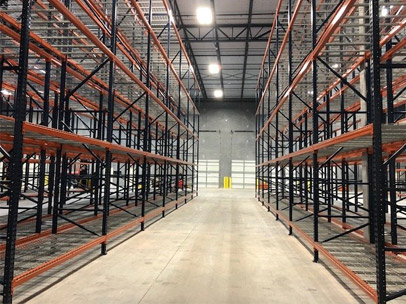 Pallet rack storage is a must for a warehouse with palletized inventory. They are versatile and can be used in numerous ways. Storage racks are best for storing specialty goods or heavier items.
Selective pallet rack is one option that works well for businesses that store all types of inventories. You’ll always need some sort of storage rack system in your warehouse regardless of what industry you work in.
Warehouse costs begin adding up when you start throwing equipment into the mix, but you should never cut corners on valuable equipment such as pallet racking. Good solid racks are durable and last for many years.
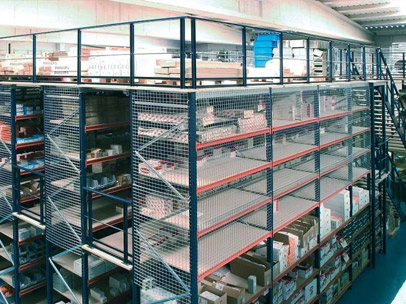
 Mezzanines
 free up extra space on your warehouse floor and are extremely flexible to use. They basically act like a second floor in your warehouse with a set of stairs that workers can access to get to the additional floor space.
Here are several different types of mezzanines:
Catwalk Mezzanine: creates pathways throughout vertical shelving to keep workers safe so they do not have to use dangerous lifts or ladders to access items
Shelf-Supported Mezzanine: uses existing shelving as the base support
Free-Standing Mezzanine: uses bolted-down columns instead of existing supports
Mezzanines offer a lot of additional space in smaller facilities but can be costly. Before you decide on a smaller warehouse, take a close look at your equipment and storage needs first. The money you save now on a smaller building will likely end up being spent on additional storage.
If, however, the deal you get on a smaller warehouse is a steal, then a mezzanine would work well to optimize space.
Lift Equipment
Even if your warehouse has lightweight inventory, you will need lift equipment to get items and pallets into or out of high places. This type of equipment will come in handy.
We all know one of the most common types of lift equipment is the good old-fashioned forklift. They are essential and a must-have. There may be circumstances where you might need other types of lift equipment depending on your business needs, racking setup, and space.
Warehouse Installation
Once your warehouse design has been determined and you know what type of equipment you will need, it will need to be installed which can be stressful and extremely time-consuming. Specific instructions must be followed so that everything is installed safely.
The DIY route is not something we would recommend, but should you decide to do this, make sure that the equipment is installed correctly to avoid injuries or other accidents. Your warehouse will then be ready for inventory after everything has been installed and you have all of your merchandise.
Stein Service & Supply Has You Covered
Stein Service and Supply is here for all of your equipment and warehouse planning needs. We have both new and used racking equipment available. We realize how hard starting a new warehouse is which is why our experts are here to help you by offering you top-notch customer service.
For more information about how we can help you set up your new facility, contact us today.