
 The warehouses of yesteryear relied on outdated systems to keep items organized along with old equipment that barely did the job. Warehouse racking experts have had to streamline their operations to become competitive in today’s market. The older systems that may have worked well in the past are fast becoming obsolete in favor of systems that are easier to use and offer increased storage space. Selecting the appropriate warehouse racking system is one such method that can improve the safety of your facility and boost productivity.
This article will discuss what a warehouse rack system is including the various types and how to pick the best one to suit your facility’s needs. We’re sure you will find a system that will suit your warehouse’s needs after you finish reading the information below.
Warehouse Racking Systems
Warehouse racking is a shelf system that requires careful planning and measurement of the physical design in order to store purchased merchandise. While they are much more complex than storing items in pallets on the floor, they do a better job of utilizing the available space of a facility.
Racking systems are structured based on course width, delivering fields, docking locations, and other facility sections. You can restrict certain areas of the building to help you get your stock organized. It’s very simple.
We will discuss the variety of racking systems that are currently available along with their uses.
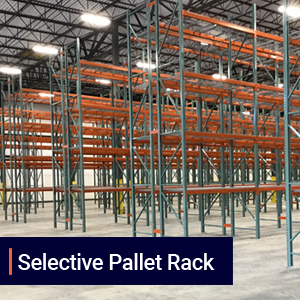 Selective Pallet Racking
Selective pallet racking systems are the most commonly used racking systems in use. There are two variations: roll-shaped (clip-in) and structural bolt-together. Learn more about Structural vs. Roll-formed Steel Pallet Rack
These systems are good for deep-reach or narrow aisle racking operations. They accommodate a single pallet and require specialized lift trucks to offer simple access and practical area usage for any load.
When It Should Be Used
• Whenever you need free entry to every pallet
• Whenever the number of pallets per unit of stock is smaller (SKU)
• When the storage facility usage is over 90%
• It makes order picks at lower phases
• Provides an entryway to every pallet without limitations
• Supports FIFO (first in first out) core performance
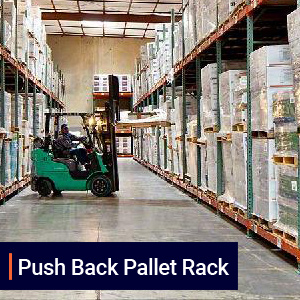 Push Back Racking Systems
Pushback pallet racking systems are primarily established to utilize area by depth instead of width to increase stockpiling density and decrease the quantity of space. They shop products between 2-5 pallets in length and are made for mass stockpiling. Pallets are stacked onto the structure while the next pallets are pushed back. When a pallet is unloaded, it is pushed to the front. Get a deep dive into High Density Push Back Pallet Rack
When It Should Be Used
These systems should be used when you have more pallets per stock and want to accomplish increased storage density or when order selecting isn’t substantial within push back racking.
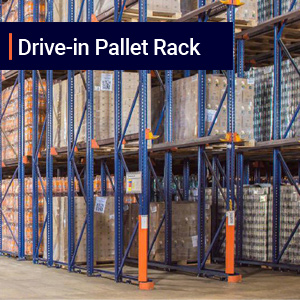 Drive-in Racking
Drive-in pallet rack makes it possible for forklifts to drive straight into bays. The main difference between a drive-in rack system depends on whether the bays have an entry point at one or both ends.
A typical entry point and exit point are utilized with drive-in systems. Drive-in storage systems only offer entrances at one end of the bay or the other. They can store largely dense products and remove aisles in a storage facility. Additionally, these systems can save lots of items in a smaller location.
When It Should Be Used
• Whenever FILO isn’t a hindrance
• In high-density structures where enclosures for specific items are required
• Inside every bay if you are not going to integrate stock-keeping systems
• You want high-density capabilities
 Carton Flow Rack Systems
Carton flow rack storage systems are also called vibrant racks of circulation or gravity circulation because they are high-density units that increase the area by utilizing depth. A rail with rollers is also used to permit pallets to travel quickly through a sloped location.
They do not require electricity for the entire operation as the gravity rollers relocate in association with the speed and brake controllers.
When It Should Be Used
• Whenever there are no forklift constraints
• When high-volume items need to be rapidly kept
• Whenever FIFO is a concern
Narrow-Aisle Racking Systems
This system is excellent for optimal storage within a warehouse facility. Narrow-aisle rack systems work with rail-guided or wire-guided reach-truck systems that include either angle iron that is bolted down the length of every bay or wire cut into the concrete to lock in the lift truck’s path.
One of the best benefits is that it is fast which leads to increased storage usage. Narrow-aisle racking is similar to selective racking in that it offers nearly all of the pallets with enhanced gain access.
When It Should Be Used
• Whenever you have a large number of items moving in and out
• When you want to increase the storage density of your warehouse facility
• If you need better usage of space


