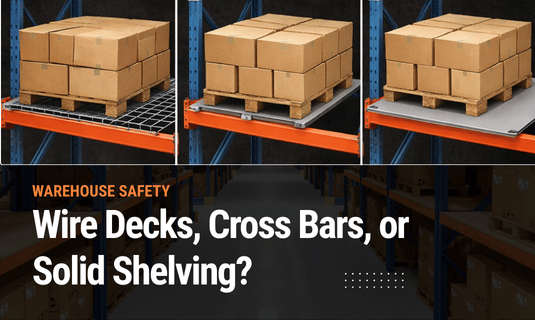
While you’re compiling the points you want to cover for your warehouse safety program, your safety topics are probably a mile long. There are dozens of OSHA and fire-safety regulations that you will need to discuss with your staff, on top of the challenges they will be facing on the job. According to OSHA, more people die in warehouse-related accidents than in other industries, which is why it is vital to address key safety guidelines in order to protect your company and your employees. The following procedures should be included as part of your safety protocols.
Important Warehouse Safety Rules
Pay Attention to How You Lift
Storing, moving, and lifting are the basics of any warehouse job. These tasks take on many forms, depending on how your teams accomplish them. We will discuss some important safety tips for lifting below.
Lifting by Hand Safely
The cornerstone of a warehouse environment is always manpower. Ergonomics should be taught on an ongoing basis throughout your safety training program. Your employees should know how to maintain the correct posture for lifting and any other work they do. Pickers can be used to pull objects off of deep shelves and are a much safer option than reaching across to grab something. If an employee needs to lift something without the help of equipment, techniques should be encouraged to protect their knees and back from injury. The following video shows the correct procedure for lifting.
Employees will try to lift something that is much heavier than they are accustomed to. Safety slogans, such as “buddy system,” should be posted throughout the facility in high-traffic areas to serve as a reminder to employees that they should find another coworker to help them move heavy items or items that are in locations that aren’t easy to access. Watch the video below to see the proper lifting technique.
Using Forklifts Correctly
Warehouse employees should have the proper certification to operate a forklift. Separate safety checklists should be developed for each driver, so they will know how to use the forklift correctly and remember to maintain and inspect their equipment prior to use. Learn more about our Forklift Training and Boom & Scissor Lift Training.
Conveyor and Loading Dock Safety
It should be common sense to anyone working in a warehouse that a loading dock should be kept clear at all times, with no overhanging items obstructing it. However, people don’t always use common sense. If there is something sitting on the dock that shouldn’t be there, you should lift or push it out of the way rather than kicking it. If conveyors are used in your warehouse, there should be some safety protocols in place for how to use them. The most common injury among employees who use a conveyor is repetitive motion from using one the entire day. You should have an ergonomics expert offer on-site corrections to your staff during the meeting. Awareness is another crucial safety factor, as overhanging edges, heavy items, or awkward shapes could fall or knock into distracted staff.
Fire Safety
Your warehouse probably has all of the required alarms, extinguishers, and sprinklers it needs to fight a fire, should one break out. But does your staff know how to use them? Trainings should be scheduled regularly during each shift so that warehouse employees will know when and how to put out different types of fires, based on the kinds of items that are being stored. You should designate several employees to check for damage to extinguishers, fire hoses, and other fire equipment. Evacuation paths should also be posted on flame-resistant signage all around the facility, so that employees will be able to exit the building should a serious fire occur.
An inhospitable environment is the best defense against a fire. You can prevent fires from occurring by storing plastics according to site regulations. Fires dealing with plastics burn hotter than most other types of fires, which causes the sprinkler systems that would normally contain the blaze to malfunction. There should also be a designated safe place for people to smoke, far away from paper products or charging equipment to avoid flicked ashes circulating through the air or still-burning butts.
Schedule Warehouse Safety Trainings Regularly
It can be tough to implement rule changes that reduce accidents and safeguard your workers’ well-being without adequate instruction or training. An in-house warehouse safety program training session should be scheduled to ensure that everyone is up-to-date on the latest updates to your safety manual. These safety meetings should be held four times a year, at minimum, to retrain and teach old and new employees. Make sure that critical updates regarding on-site machinery, new safety equipment, and uniform changes are addressed during each meeting.
Warehouse Safety Rules Signage

Signs should be hung throughout the facility in several strategic areas:
- Places where flammable liquids or materials are stored
- Places where dangerous chemicals are stored
- Areas where falls are most likely to occur
- All hard-hat zones
Loading docks are very hectic and busy places. Employees may not be able to hear each other easily over noisy electrical equipment, trucks, or forklifts. These things may seem obvious to long-time employees, but not to new, less-experienced staff. To keep everyone on the same page regarding safety awareness, you should give your new employees visual cues that are easy to read and interpret.
Keeping Warehouse Floors Clean
Cleanliness is one of the most important safety protocols of all. Employees should be appointed during each shift to keep the floor cleaned regularly, including removing debris and boxes. Spill kits should be kept on hand if you store any liquids or work with chemicals, and should always be accessible. Almost any article you read regarding warehouse safety will tell you how important it is to prevent falls or slips from occurring on the job, as they are one of the most common types of workplace injuries. Make sure that your shift managers do everything they can to keep the floors spotless by performing daily inspections and having staff keep trash bins emptied. You should also have a warehouse inspection checklist on hand to give to several appointed staff members to review twice every workday.
Are you ready to take your safety protocols to the next level? Stein Service & Supply can assist you in developing a Warehouse Safety Program.