
Boom & Scissor Lift Training
Our installation crews use scissor lifts to set steel overhead, and we offer aerial lift training to our customers. We train and certify boom and scissor lift operators and the in-house staff who teach new operators.
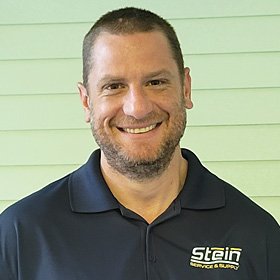 Certified byRoss UllmanPresident, Stein Service & Supply

Aerial Lift Training Services
We provide operator and train-the-trainer courses for boom and scissor lifts, for businesses of any size. The Occupational Safety and Health Administration (OSHA) requires employers to train each aerial lift operator in safe operation, and employers often expect job candidates to hold this certification. Operators who complete our course are certified to operate boom and scissor lifts in compliance with federal regulations.
On each project, our goal is that every installer, whether an employee or a subcontractor, has scissor lift and forklift training.
We work mainly in North Carolina, South Carolina, Georgia, and Virginia, and in 2025 we completed projects in 24 other states.
- Operator course for each person who will operate a scissor or boom lift
- Train-the-trainer course for staff who will teach new operators
- Classroom instruction on regulations, lift components, and hazards
- Hands-on inspection, function testing, and operation of the lift
- Certification on the class of lift each operator will use
- Forklift certification under OSHA 1910.178, in a separate class
Scissor Lifts and Boom Lifts
The two machines do different work, and managers and operators both need to know which lift is suitable for a given task.
| Scissor lift | Boom lift | |
|---|---|---|
| Lift mechanism | Rises vertically on crisscross braces | Rises on a hydraulic arm. A boom lift is also called a cherry picker. |
| Platform | Larger, with space for people and materials | Smaller |
| Reach | Mostly vertical, with limited horizontal movement | Extends to greater heights and also moves horizontally |
| Typical use | Usually warehouses and storage facilities | Usually construction sites and outdoor projects |
Course Topics
The classroom instruction covers the lift, the responsibilities of each person involved with it, and the hazards of the work area. Several of these topics are required by the ANSI/SAIA A92 standards, the industry standards for aerial lifts from the American National Standards Institute (ANSI) and the Scaffold and Access Industry Association (SAIA).
- The responsibilities of the people who sell, own, use, and operate the lift
- The basic components of the lift and their functions
- Inspection of the lift before each use
- Identification of hazards such as ditches, unstable ground, steep slopes, and overhead obstructions
- Conditions that cause collisions, tip-overs, or contact with energized power lines
- Testing of each lift function
- Safety inspection of the complete work area
Training Format
The course follows the same model as our forklift training, with classroom instruction followed by hands-on operation.
Classroom
Operators learn the regulations, the function of the lift, and the identification of hazards. They learn why a lift tips over before they operate one.
Hands-On Evaluation
Each operator inspects, function-tests, and operates the lift with an instructor. Training is site specific, so we evaluate operators in their own facility, with its clearances and equipment.
Certification
Operators are certified when they complete the course. Because scissor lifts and boom lifts have different hazards, such as tip-overs, overhead obstructions, and power lines, we certify each operator on the class of lift that operator will use.
Boom and Scissor Lift Training Questions
What happens if an uncertified employee has an accident on a lift?
How long does a class take?
Do you also train our trainers?
Does lift certification cover forklifts?


Contact
Discuss a Lift Training Project
Contact us with the number of operators and the types of lifts they use.