
Pallet Rack Repair
Rack repair is a core service at Stein Service & Supply. We assess damaged pallet rack, repair uprights with bolt-on kits, and replace the parts that cannot be repaired.
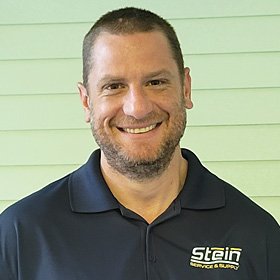 Certified byRoss UllmanPresident, Stein Service & Supply

Pallet Rack Repair Services
We inspect each damaged upright, identify whether it requires a repair or a replacement, and complete the work. Most forklift damage is in the bottom few feet of an upright. In many cases, we cut out the damaged section and bolt in a repair kit while the product stays on the rack.
We work mainly in North Carolina, South Carolina, Georgia, and Virginia, and in 2025 we completed projects in 24 other states.
- On-site assessment of uprights, beams, braces, anchors, and safety clips
- Written findings that identify each upright for repair or replacement
- Repair kits matched to the rack and to the damage
- Replacement of uprights, bent beams, and missing safety clips
- Re-anchoring of repaired uprights and removal of scrap
- Column protectors, end-of-aisle guards, and guard rail
Rack Damage and the Fire Code
Damage to an upright is both a structural problem and a fire code problem. A dent at the base of an upright reduces the capacity of the frame, even when the rest of the frame appears undamaged. The dent also pulls the upright out of alignment, which puts more stress on the damaged area, and the damage increases over time.
In North and South Carolina, for example, the fire code requires rack to remain structurally sound, so damaged rack is a fire code violation that a fire inspector can cite. A bay marked off for damage also takes pallet positions out of use until the repair is complete. Each assessment checks for the following signs of damage.

- Scraped paint low on a column, a common sign of an unreported impact
- A gap between the upright and a 3-foot level or straightedge held against it
- Bent, twisted, or broken braces
- Rack that is out of plumb or leaning
- Missing safety clips, or beams that are not fully seated
- Loose, bent, or missing base plates and anchors
- Beams that remain bowed after unloading, or that deflect more than 1/180 of their length under load (approximately ½ inch on a 96-inch beam)
- A crushed column protector, which indicates that the rack behind it also requires inspection
The fire code includes housekeeping requirements for the warehouse. When the rack is damaged, the fire marshal can cite the facility.
Repair or Replacement
In most cases, the choice between a repair and a replacement depends on where the damage is on the upright and where the upright stands in the row. A repair kit replaces the bottom section of an upright. Damage higher up, or heavy damage on both columns, usually requires a new upright.
| Condition | Typical Solution | Reason |
|---|---|---|
| Damage low on the front column, rest of the frame sound | Repair kit | The kit replaces only the damaged section. Lighter loads can usually stay on the rack during the repair. |
| An upright in the middle of a row | Repair kit | Replacement can require unloading the entire row, while a kit is installed with the row in place. |
| Several uprights damaged at the same height | Repair kit | One kit design applies to all of them. |
| Tall or custom uprights | Repair kit | New tall or custom uprights are expensive to purchase and ship. |
| Damage at or above the first beam level | Replacement | A kit covers only the bottom of the column. |
| Heavy damage on both the front and back columns | Replacement | When both columns are heavily damaged, a new upright is usually the better solution. |
| Damage at many locations and heights | Replacement | No single kit covers the damage. |
| Short, standard uprights, or an upright at the end of a row | Replacement | A new upright usually costs less than a repair. |
| Rust that has corroded the steel | Replacement | Corroded steel remains weak, and a kit does not correct it. |
| Obsolete rack with no parts available | System replacement | For a food service provider, parts for the existing cooler and freezer rack were no longer available, and its welded connections could not be adjusted. We designed a new structural rack system. |
| A building move planned soon | Replacement after the move | A repair is not cost-effective for rack that will be removed. |
After the on-site assessment, we identify which uprights take a repair kit and which require replacement. Repair kits
Repairs, Permits, and Upright Capacity
A repaired upright must carry its original rated load. Whether the repair needs a permit or an engineer’s approval depends on that capacity.
Beams and Decking
Replacement of a bent beam or a damaged wire deck with a matching part does not require a permit.
Upright Repairs
We match each kit to the rack and to the damage, so the upright keeps its rated capacity. Where a jurisdiction requires a permit for the repair in North or South Carolina, we pull it under our general contractor license. Permitting
Beam Levels
A wider space between beams reduces the capacity of the upright. When a repair changes the beam spacing, or beams are moved to new heights, the installer or a structural engineer must approve the new spacing. In South Carolina, a permitted layout cannot change without prior approval.
Matching Parts
Replacement uprights, beams, and braces should come from the manufacturer of the existing rack, because components from different manufacturers can cause a rack failure.
For upright repairs and replacements, the question is capacity. When a specialist in rack completes the repair and the upright keeps its rated capacity, a permit is usually not required. Beam and deck replacements do not require a permit.
Repair Process
Assessment
We inspect beams, uprights, and joints for bends and cracks, compare the loads to the rated capacity, and check the anchors, bolts, and safety clips. The results go into our written findings.
Bay Preparation
Lighter material that is properly secured can usually stay on the rack, but heavy or overhanging loads must be removed from the bay before the work starts.
Repair or Replacement
For a kit, we lift the upright off the floor, cut away the damaged section, and bolt the kit in its place. We replace uprights that cannot take a kit, bent beams, and missing clips. Kit installation
Anchoring and Cleanup
We anchor the upright to the floor and remove the scrap. The bay then returns to service.
Inspections and Rack Protection
After a repair, regular inspections find new damage, and rack protection prevents some of it. A weekly walkthrough by facility staff identifies impacts that drivers do not report, and a professional inspection is recommended at least once a year and immediately after any impact.
Column protectors absorb an impact before it reaches the upright. End-of-aisle guards and guard rail protect row ends and tunnel bays, the openings through the rack for cross traffic. Protector types
In freezers, wet rooms, outdoor storage, and aisles with frequent impacts, structural rack is more durable than roll-formed rack. Forklift operator training is the first priority, and we provide forklift certification classes.
Rack Repair Questions
What should be done with a damaged bay before the repair?
What causes most rack damage?


Contact
Discuss a Rack Repair Project
Contact us with the location of the damage and the number of damaged uprights.