
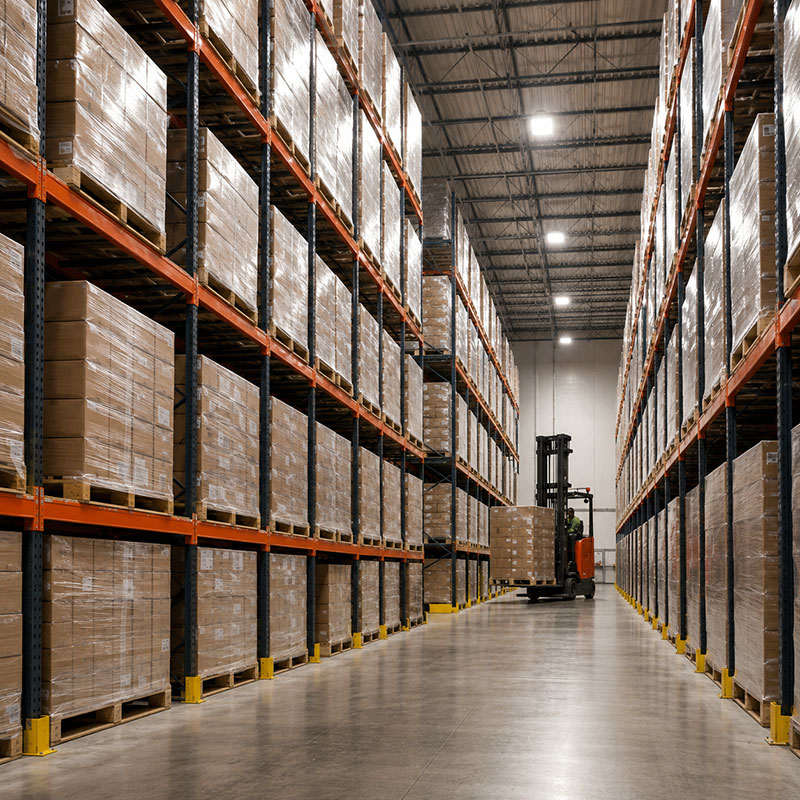
 Warehouse space can disappear quickly.
A few new product lines, a seasonal inventory push, or a change in order volume can make a building feel smaller than it really is. When that happens, many companies start looking for ways to add pallet positions without expanding the facility or moving into a larger space.
That is where high-density pallet storage comes in.
High-density storage is designed to reduce wasted aisle space and increase the number of pallets a warehouse can store within the same footprint. For the right operation, it can be a practical way to improve storage capacity, protect floor space, and make better use of the building’s vertical height.
But high-density storage is not the right answer for every warehouse.
The best system depends on what you store, how many SKUs you manage, how often inventory turns, what forklifts you use, and how much access your team needs to individual pallets throughout the day.
What Is High-Density Pallet Storage?
High-density pallet storage uses rack layouts that store pallets deeper or closer together than a standard selective rack system. Instead of giving every pallet position its own aisle access, these systems reduce the number of aisles and use that space for additional storage.
That is the trade-off.
You gain more pallet positions, but you usually give up some selectivity. In other words, your warehouse may be able to store more product, but your team may not be able to access every pallet as quickly as they would in a selective rack layout.
For some operations, that trade-off makes sense. For others, it can slow down daily workflow.
High-density pallet storage is usually a better fit for facilities that store larger quantities of the same product, work with a smaller number of SKUs, or move inventory in batches instead of individual pallet picks.
When High-Density Storage Works Best
High-density storage works best when your inventory is predictable.
If your warehouse stores a high volume of similar palletized products, deep-lane storage may help you use space more efficiently. This is especially true when entire lanes can be dedicated to the same SKU or product group.
For example, a warehouse that stores full pallets of the same product for days or weeks at a time may benefit from a dense storage layout. The team does not need constant access to every pallet. They need a way to store a large amount of product safely and efficiently.
High-density storage can also make sense in refrigerated or freezer environments. In cold storage, every square foot is expensive to build, operate, and maintain. Reducing the number of aisles can help maximize the value of that controlled space.
It may also be a good option when a company is trying to avoid offsite storage, delay a facility expansion, or improve capacity inside an existing building.
Why SKU Count Matters
SKU count is one of the biggest factors in choosing a pallet storage system.
If you carry many different SKUs and need frequent access to each one, a highly selective system may be the better choice. Your team can reach each pallet quickly, which supports faster picking and easier inventory control.
If you carry fewer SKUs in larger quantities, high-density storage becomes more attractive. When several pallets of the same product can be stored together, deep-lane systems can help reduce aisle space and increase capacity.
This is why high-density storage is often tied to low-SKU operations.
The system should support how inventory actually moves. If the warehouse layout forces your team to unload multiple pallets just to reach the one they need, the added storage capacity may not be worth the slowdown.
Inventory Flow Matters Too
Before choosing a high-density storage system, it is important to understand how product needs to rotate.
Some systems are designed around LIFO inventory flow, which means last in, first out. The last pallet loaded into the lane is usually the first pallet removed. This can work well for durable goods, bulk storage, or products that do not need strict rotation.
Other layouts may support FILO or other inventory flow methods depending on how the system is accessed and configured.
This matters most when products have expiration dates, batch tracking requirements, or limited shelf life. If rotation is important, the storage system must be designed around that from the beginning.
A dense rack layout can add capacity, but it should not make inventory harder to manage.
Drive-In and Drive-Through Rack Options
Two common high-density storage options are drive-in rack and drive-through rack.
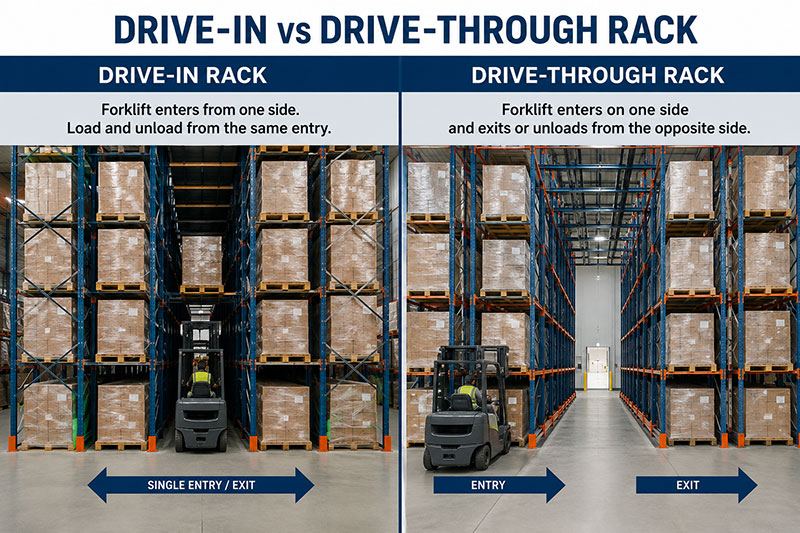
A drive-in pallet rack system allows forklifts to enter the rack lanes from one side to place and retrieve pallets. This creates deep storage lanes and reduces the number of aisles needed in the warehouse. It is often used when a facility stores large quantities of similar products and does not need frequent access to every pallet.
Drive-through rack is similar, but it is open on both ends. This can allow product to be loaded from one side and retrieved from the other, depending on the design. That added access can help when inventory rotation is more important.
Both options can increase storage density, but they need to be matched carefully to the operation.
The right choice depends on product type, inventory flow, pallet quantity, available space, and how your forklift operators move through the warehouse each day.
Forklifts Play a Major Role
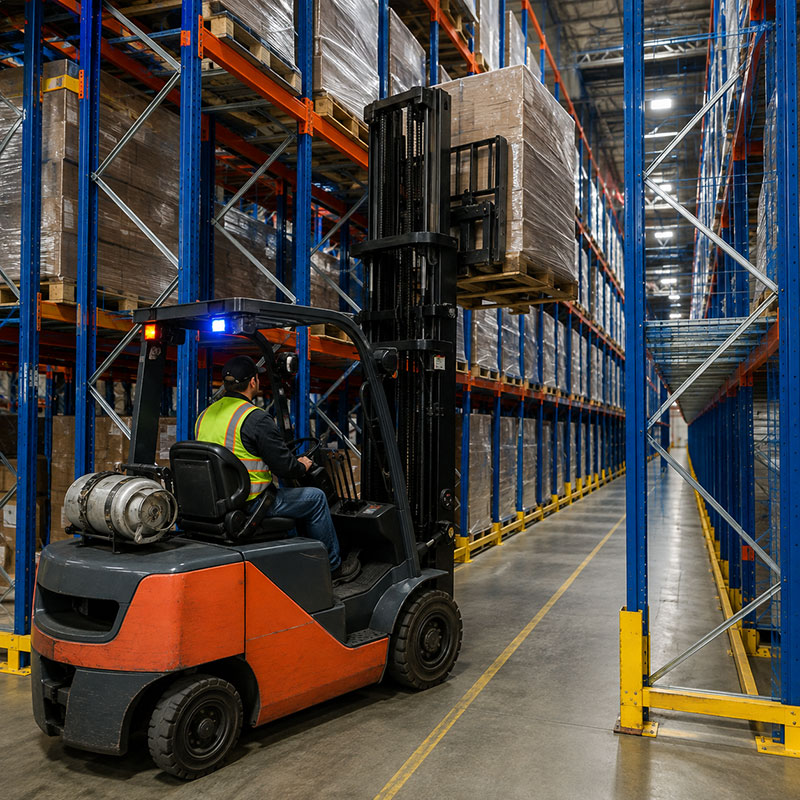 High-density storage is not only about racks. Your forklifts are a major part of the design.
Forklift width, lift height, turning radius, load capacity, and operator clearance all affect how the system should be laid out. In systems where forklifts enter the rack structure, those measurements become even more important.
A layout that looks efficient on paper can create daily challenges if the forklift does not have enough room to move safely and consistently. Even small clearance issues can slow down operators, increase equipment wear, or lead to rack damage over time.
That is why equipment review should happen before materials are ordered.
A good warehouse storage design should consider the rack, the pallets, the forklifts, and the operators using the system every day.
Pallet Type and Load Size Cannot Be Ignored
Pallet type also affects high-density storage design.
Standard pallets are easier to plan around because the rack components, rail spacing, and lane dimensions can be designed more predictably.
Custom pallets, inconsistent pallet sizes, unusual load shapes, or damaged pallets can change the system requirements.
The weight of the load matters too.
Your inventory’s load must match the rack system’s structural rating and capacity. The deeper and denser the system, the more important it is to confirm that the rack is designed for the actual products being stored.
This is one of the reasons high-density storage should not be selected by pallet count alone. The system has to fit the product, the pallet, the equipment, and the building.
Building Conditions Affect the Layout
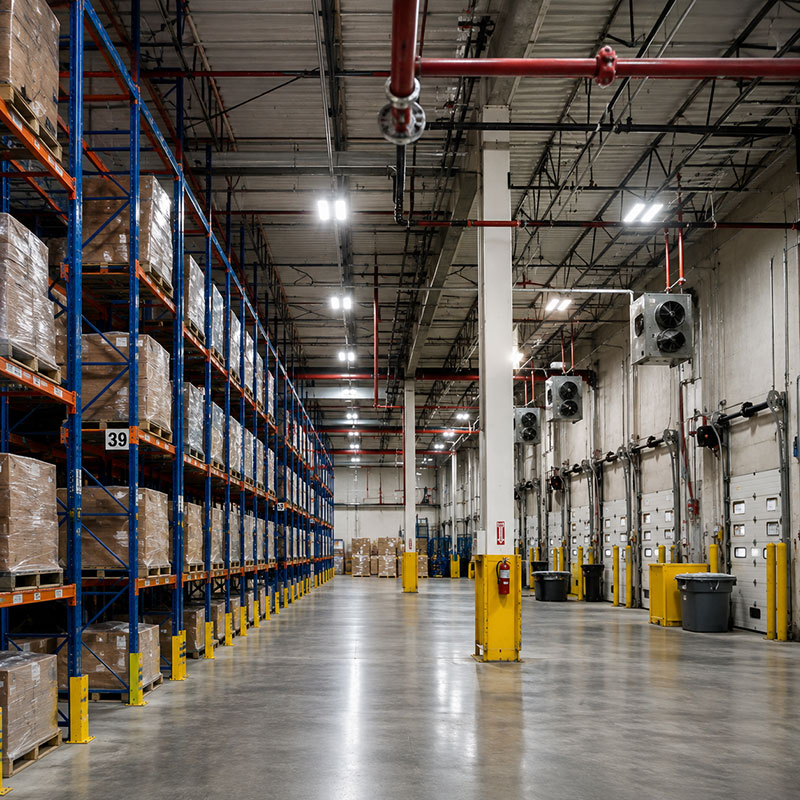 The building itself can support or limit a high-density storage plan.
Ceiling height, usable clear height, sprinkler locations, columns, lights, dock doors, floor condition, and overhead obstructions all need to be reviewed before the layout is finalized.
A warehouse may have enough square footage on paper but still lose valuable storage space because of columns, sprinkler clearance, hanging pipes, or traffic flow around dock areas. In some facilities, the best opportunity is not adding more rack. It is changing how the available space is used.
This is where a site walkthrough and CAD layout can make a major difference.
It is much easier to adjust a design before rack is ordered than it is to change a system after installation begins.
Safety and Maintenance Should Be Part of the Decision
High-density rack systems place more product in a concentrated area. Some systems also require forklifts to move closer to or directly into the rack structure.
That makes safety planning important.
Operators need enough clearance to move confidently. Rack lanes need to be designed around real equipment dimensions. Guide rails, protective components, and proper loading sequences may be needed depending on the system.
Regular rack inspections are also important. Because forklift contact is more likely in dense systems, damage should be identified early. Uprights, rails, anchors, bracing, and other components should be checked as part of ongoing warehouse maintenance.
High-density storage can be very effective, but it needs the right design, training, and inspection habits to perform well long term.
When Selective Rack May Be a Better Fit
High-density storage is not always the best answer.
If your warehouse handles many SKUs, frequent pallet picking, or fast-moving inventory that changes daily, selective pallet rack may be more practical. It provides direct access to each pallet and usually supports more flexible inventory management.
Selective pallet rack may also make sense when product rotation is important, when picking speed matters more than storage density, or when forklifts and operators need more open access throughout the warehouse.
The goal is not to choose the densest rack system possible. The goal is to choose the storage system that best supports the way your warehouse operates.
Sometimes that means high-density storage. Sometimes it means selective rack. In many facilities, it means using more than one rack style in different areas of the building.
How Stein Helps Evaluate the Right Storage System
Choosing a warehouse storage system starts with understanding the operation.
Stein Service & Supply helps companies review inventory needs, pallet types, forklift requirements, building conditions, storage goals, and workflow before recommending a rack layout. That planning step helps determine whether high-density pallet storage makes sense or whether another system would better support the facility.
For warehouses with high pallet volume and a limited number of SKUs, a drive-in pallet rack system may be one option worth reviewing. For operations that need greater selectivity or faster pallet access, selective rack, push back rack, pallet flow, or a combination of systems may be a better fit.
The right answer depends on the building, the product, and the way inventory moves.
If your warehouse needs more pallet positions but expansion is not the preferred option, high-density pallet storage may help you get more from the space you already have. Stein can help you compare options, plan the layout, and choose a system that supports both storage capacity and day-to-day operations.


