
One of the most popular inventory storage systems in use in many warehouses is selective pallet racks. They are installed back-to-back to create aisles for forklifts to access inventory in a typical warehouse application.
These systems are also available as “double-deep” selective pallet rack solutions to increase inventory storage by an additional 20-40%. To work at maximum efficiency, this option also has specific equipment requirements.
Let’s compare single and double-deep selective pallet racks to determine the best option for your business.
What is a Selective Racking System?

If you have a limited number of SKUs and handle large quantities of inventory, selective pallet rack systems work well. Both the single and double-deep options employ similar pallet racking system components, as well as the following:
- Installation and maintenance are streamlined as the selective racks are easy to put together.
- They utilize a LIFO inventory cycle.
- There are a wide range of heights, widths, and ratings available depending on the layout or configuration of your warehouse.
- Vertical frames that can reach a maximum height of 30’ can easily be anchored into the existing concrete slab. For additional stability and strength, these systems can be attached to the walls and roof.
What is Double-deep Selective Pallet Racking?
Single-deep pallet rack options can be installed back-to-back to create 8-9’ wide aisles for your employees and equipment. Using standard material handling equipment, pallet inventory can be accessed directly from the aisle.

Double-deep racking, on the other hand, can contain up to four pallet rack assemblies that can be installed back-to-back-to-back-to-back to create deeper storage on both sides of the aisle.
Up to 50% of your aisles can be eliminated using the double-deep layout compared with a standard selective rack system layout. The fewer aisles a facility has, the more available storage space you will have for your products.
Double-deep racking options work well in the following conditions:
- Long or medium-term shelf life as a result of the LIFO (Last In, First Out) loading requirements
- Dry storage inventory without any expiry concerns
- Double-deep option for cold storage that minimizes utility costs and maximizes storage
- Double-deep racking maximizes the amount of storage space in your facility, while the improved accessibility and flow benefit the efficiency and productivity of your workers.
Single vs. Double-Deep Rack Comparison
| Single-Deep | Double-Deep | |
|---|---|---|
| Storage increase | Baseline | +20–40% |
| Aisle reduction | — | Up to 50% |
| Inventory access | Direct, any pallet | Rear pallet requires front pallet removed |
| Equipment needed | Standard forklift | Modified or specialized forklift |
| Best for | High SKU count, frequent picking | Low SKU count, LIFO-tolerant inventory |
Required Equipment for Double-Deep Racks
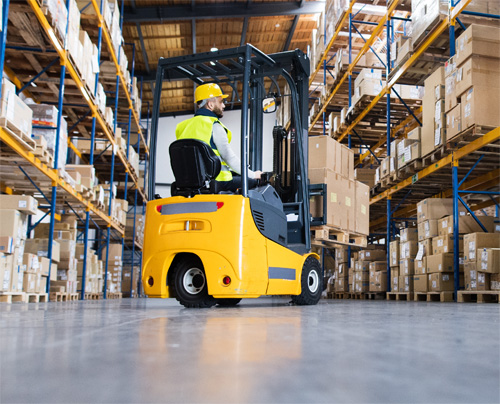 Before committing to a double-deep pallet rack system, it’s important to understand the equipment requirements – this is often the deciding factor for warehouses evaluating the switch.
In a double-deep configuration, the rear pallet position sits beyond the reach of a standard forklift’s forks. Standard counterbalance forklifts simply can’t extend far enough to place or retrieve that second pallet without damaging the load or the rack.
To access both positions, warehouses typically need one of the following:
- Deep-reach forklifts – reach trucks built with extended fork carriages designed specifically for double-deep access
- Pantograph (double-reach) attachments – a telescoping fork mechanism added to a reach truck that extends and retracts to reach the second pallet position
- Double-deep-rated reach trucks – purpose-built trucks from manufacturers that are rated and calibrated for double-deep operation out of the box
If your fleet currently runs standard counterbalance or single-reach trucks, plan for either a fleet upgrade or retrofit – and factor that cost into your overall double-deep decision alongside the storage gains. Operators will also need training specific to double-deep placement, since misjudging depth is one of the more common causes of rack and pallet damage in these systems.
Case Studies
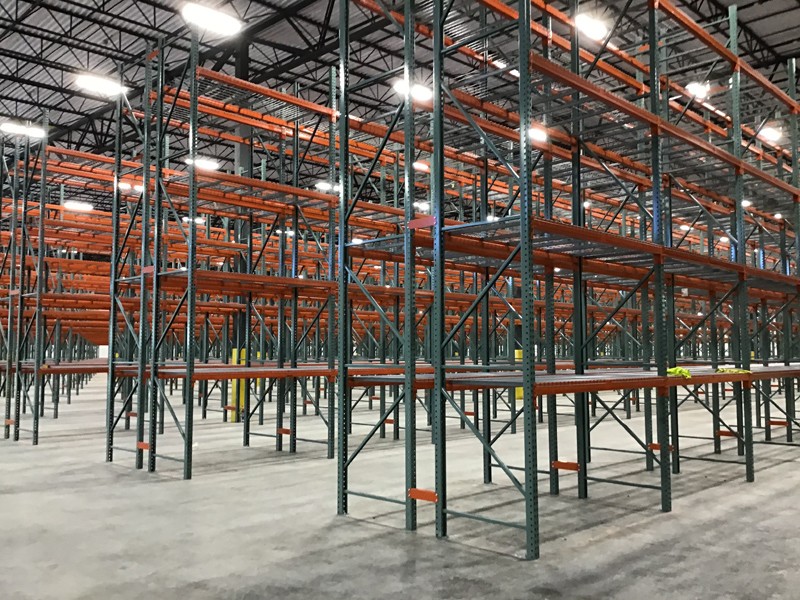
Morrisette Paper & Packaging Pallet Rack System
We installed a single deep, selective pallet rack in this new 121,000+ sf warehouse in Greensboro, NC.
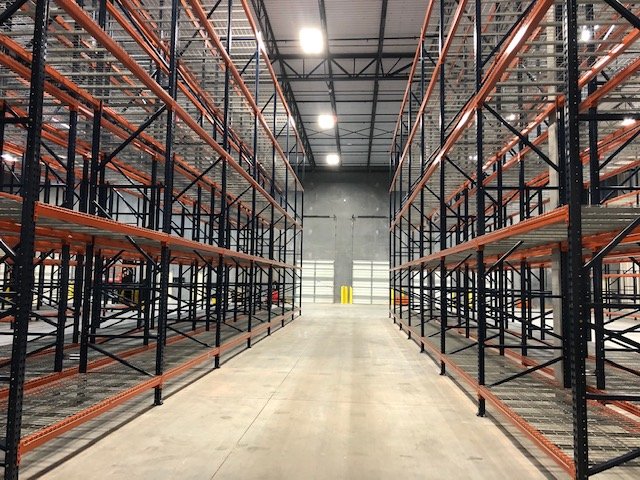
Regional Distribution Center
We installed 2-deep and 3-deep selective pallet rack – a deeper configuration of the double-deep approach – for this client in Charlotte, NC.
Optional Selective Rack Features
Depending on the racking manufacturer, there are other options available, including:
- “Forklift legs that taper the front leg in toward the rear support with a broader access point to minimize potential forklift damage to the racks
- Replaceable anchor/feet point kits that allow for repairs to racks without unloading all of your inventory
- Replaceable guides or rollers that can assist lift drivers with moving inventory in and out of racks
This racking option may appear to be an easy decision as double-deep racks can increase your overall storage capacity. However, they aren’t always the best option for a warehouse facility. Double-deep racks provide only a small amount of additional storage depending on the building’s layout and size. If your building has angled walls or irregularly-shaped rooms, double-deep racking may not work very well. Equipment expenses can also prove to be costly since double-deep selective pallet racks require specific equipment.
Other factors to consider before purchasing a double-deep racking system include:
• Building specifics
• Pallet sizes
• Inventory cycle
• Shelf life
• Product flow
Stein Service & Supply will be able to help you determine whether a single or double-deep racking option will work for your facility depending on your specific needs and factors. We can answer any questions you have about the two options to help you make a more informed decision.
Single vs. Double-Deep Rack Questions
What's the difference between single-deep and double-deep pallet rack?
Single-deep pallet rack stores one pallet per position, with every pallet directly accessible from the aisle. Double-deep rack stores two pallets back-to-back in each position, increasing storage density but requiring a forklift that can reach the rear pallet.
How much more storage does double-deep racking provide?
Based on industry benchmarks, double-deep racking typically increases storage capacity by 20-40% compared to single-deep selective rack, and can eliminate up to 50% of aisles depending on the warehouse layout.
Do I need a special forklift for double-deep racking?
Yes. Standard counterbalance forklifts can’t reach the rear pallet position in a double-deep setup. You’ll need a deep-reach forklift, a reach truck with a pantograph (double-reach) attachment, or a reach truck specifically rated for double-deep operation.
Is double-deep racking compatible with FIFO inventory?
Not well. Double-deep racking works on a LIFO (last in, first out) basis, since the rear pallet in each position can’t be accessed until the front pallet is removed. It’s best suited for inventory without strict FIFO or expiration requirements.


