
Operations that need high storage density and speedy access for large batches of identical inventory often turn to Last-In, First-Out (LIFO) rack systems. These systems are built so that the most recently stored pallets are the first to be removed – ideal for products with long shelf lives and stable inventory. Along with space-saving and reduced travel time, they work best when your goods don’t require strict rotation or expiration date concerns.
Below are four LIFO-style rack configurations frequently used in high-volume warehouses. Each offers different trade-offs for space, equipment, safety, and budget.
 Drive-In Rack
Drive-in racks let forklifts load from one side, often backing in to place or remove pallets. Pallets rest on internal rails, which saves space by minimizing beams in the front. This system works well for bulk inventory that doesn’t need individual access frequently—think large runs of the same SKU. But it demands precise forklift operation, solid rail design, and safety measures since selectivity is low.
Double-Deep Pallet Rack
A double-deep pallet rack places one pallet slot directly behind another. By doubling up storage depth, you cut down aisle space needed and increase density. However, this style typically requires a deep reach forklift that can handle pallets from the back rows. Also, clearance for outriggers and reach mechanisms must be considered—mistakes here lead to damage or restricted access.
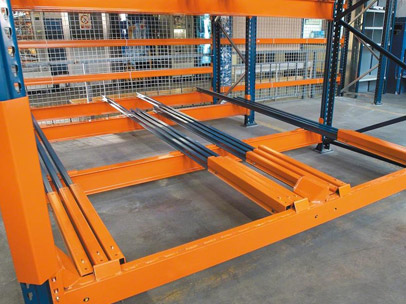 Push-Back Rack
Push-back systems stack pallets deeply, allowing access via the front. You push in new pallets which slide back on carts or rollers. It offers higher density while still keeping accessibility reasonable. These systems perform well with lighter or mid-weight pallets where productivity and storage density both matter. Key considerations include maintenance (rollers need upkeep, carts require space), equipment lift height, and consistent pallet sizes.
Double-Wide Drive-In
Double-wide drive-in takes the drive-in concept further. By expanding the width of bays and allowing forklifts to access two pallets side by side (often with special trucks or attachments), you can double throughput per pass. It’s efficient where labor or travel time is costly. But with the increased size and complexity, safety and equipment demands go up.
Choosing the Right LIFO Style
When picking a LIFO rack system, consider:
- Product Uniformity: Are most pallets identical size, weight, and frequency of use?
- Equipment Compatibility: Does your forklift fleet support deep reach, side access, or special attachments?
- Safety & Clearance: Are aisles, support columns, floor anchoring, and rail spacing properly accounted for?
- Budget vs. Density: Deeper systems cost more to build and maintain, but save on space.
Why an Expert Assessment Matters
Even if you know what style you want, professional evaluation can save you from costly mistakes. Look for services that check structural integrity, anchoring, load ratings, and whether your current racks are suited for modification. A solid LIFO system that isn’t maintained or built to spec can become an operational risk.
Even if you know what style you want, professional evaluation can save you from costly mistakes. Look for services that check structural integrity, anchoring, load ratings, and whether your current racks are suited for modification. A solid LIFO system that isn’t maintained or built to spec can become an operational risk.
Quick Comparison Table
| LIFO Rack Type | Density Gain | Accessibility | Equipment Need | Ideal Use Case |
|---|---|---|---|---|
| Double-Deep Pallet Rack | Moderate | Reduced access to rear pallets | Deep-reach forklift | Warehouses with many identical SKUs |
| Push-Back Rack | High | Good from front | Consistent pallets, lift height | Operations balancing access + density |
| Drive-In Rack | Very High | Poor selectivity | Skilled forklift operators | Bulk, slower-moving inventory |
| Double-Wide Drive-In | Very High | Limited, with higher risk | Special trucks or arrangements | Large runs of same product where speed of put-away matters |
Bottom Line
LIFO rack systems can significantly boost usable storage while reducing labor and travel cost – if chosen carefully. Matching the style to your product mix, equipment, safety constraints, and growth plans is critical. When done right, a LIFO layout becomes a strong competitive advantage rather than a logistical headache.


