
In the 21st century, the demand for different types of warehouses continues to grow. It’s important for businesses to choose the one that best suits their operational needs and requirements. There are many factors that lead companies to select one type of facility over another, as there are a variety of different warehouses on the market today.
This article will discuss why different types of warehouses are necessary for certain businesses, the specifics that distinguish one warehouse from another, and the various warehouse types available as well as their benefits.
Why Different Types of Warehouses Exist
More industries are requiring warehousing than in years past because stored cargo varies among all kinds of sizes and shapes. Product demand also varies due to population growth, seasonality, lifespan, product type, and price, and have compelled warehouses to specialize in certain products or industries to meet the handling requirements of their cargo.
The reason there are so many different types of warehouses are due to the following factors:
- The characteristics of the accommodated products, including longevity, dimension, weight, size, etc.
- Proximity of the facility to seaports, airports, railway stations, and highways
- Type of available equipment to move, manage, and store goods.
- The amount of storage space needed
- Capacity to store goods that are sensitive to humidity, temperature, and other environmental conditions
- Fire-resistant and 24×7 security facilities
- Procedures in place to provide service in a timely manner
- Hands-on customer service
- Different transport modes and alignment of the facility
- Certifications and licenses to address legalities such as trade permits
Types of Warehouses Available
Here is a list of different types of warehouses, along with the benefits and descriptions, so that you can familiarize yourself with them.
Distribution Centers
Distribution centers store and receive products from various manufacturers in bulk, and assist with breaking the bulk to redistribute directly to customers or to wholesalers and retailers.
These types of warehouses feature the following benefits:
- Distribution centers take bulk orders and break them up so that retailers won’t need to hold large amounts of stock, which reduces risk if something doesn’t sell well and saves on holding costs
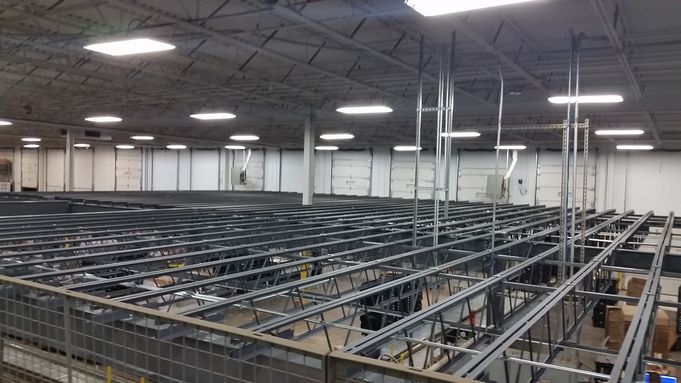
VIEW CASE STUDY
• They can be used as docking centers where goods coming from the same destination are packed and grouped together
• Third-party distribution centers benefit companies through their expertise and experience
• They also eliminate the need to invest time in staff, technology, and space by freeing up a company’s capital and valuable time
Climate and Temperature-Controlled Warehouses
Climate Controlled Warehouses
Climate-controlled warehouses have the ability to preserve very sensitive products by maintaining humidity, temperature range, and airflow levels. They come equipped with heavy-duty insulation for superior environmental quality, along with high-quality HVAC systems, customizable thermostats, and dehumidifiers. They are also expensive and very limited.
These types of warehouses feature the following benefits:

VIEW CASE STUDY
- The facilities are tightly insulated from the outside environment because they deter pests, dust, and other invasions from entering them
- They protect expensive paintings and electronics from extreme humidity, cold, and heat
- They eliminate mildew and mold growth that can damage goods made of fabric and wood
Temperature Controlled Warehouses
Temperature-controlled warehouses differ from climate-controlled warehouses in that they maintain the temperature using a set range to keep the quality of the good intact. These facilities use strategically-placed heating or cooling units. The requirement varies depending on the characteristics of the products being stored and the seasons.
These types of warehouses feature the following benefits:
- They shield products against extreme weather
- To maintain the physical characteristics of sensitive products, they follow strict quality control measures
Hazardous Material Warehouse Facilities
These warehouses have high safety standards pertaining to the storing and handling of hazardous materials, including radioactive or toxic substances, chemicals, gases, or explosives. The employees, who are highly trained and certified by HAZMAT, wear personal protective equipment to minimize exposure to dangers that pose serious risks of injury and illness to other employees. Because these facilities pose a risk to the environment, property, and public safety, they are located away from densely populated areas.
These types of warehouses feature the following benefits:
- Materials are kept in storage units that are specifically designed to prevent them from being in contact with each other
- The employees conduct risk assessments and take other preventive measures to protect cargo
Fulfillment Centers
These facilities are warehouses that are operated by third-party companies that subcontract their incoming orders for fulfillment. The center receives then processes, and ships the order to the customer. For faster order fulfillment services, they are equipped with robotics, automation, and specialized handling equipment.
These types of warehouses feature the following benefits:
- Retailers lacking the adequate space needed to store their items will not have to deal with finding and renting additional warehouse space
- Companies only pay for the services they wish to use, which keeps costs predictable
- Retailers do not have to invest excess capital, as they can extend their customer reach with the ability to ship and deliver items anywhere in the country
- By outsourcing order fulfillment, companies can focus more on their core competencies, including selling their products, marketing, and design
Consolidation Centers
These facilities receive goods from a variety of different suppliers and combine them into larger, economical shipping loads that can be transported onto a production line or straight to the customer. Before the goods reach the stores, they may go through regional distribution centers. Consolidation centers have tight logistical constraints because they are strategically located to serve the needs of urban communities.
These types of warehouses feature the following benefits:
- Lower costs and less fuel emissions by using fewer trucks
- Loading or unloading is the only moving involved, which reduces product handling
- Companies can leverage transportation costs with other businesses and pool shipments together to lower shipping costs through collaborative scheduling
Automated Warehouses
The daily operations inside of these facilities are optimized with robotics and AI technology to provide a safer work environment. Technologies perform all of the repetitive tasks so there is less manual labor involved. Equipping a warehouse with automated machines boosts ROI by reducing labor demands and improving accuracy.
These types of warehouses feature the following benefits:
- Speeds up order fulfillment and product retrieval processes
- Provides a safe work environment for employees as AI performs all of the hazardous tasks, leading to fewer accidents
- Automating manual tasks saves labor costs
New and more complex warehouses are being constructed all the time to keep up with the rise of outsourcing opportunities.


